
From project to product: why your technology isn’t the problem
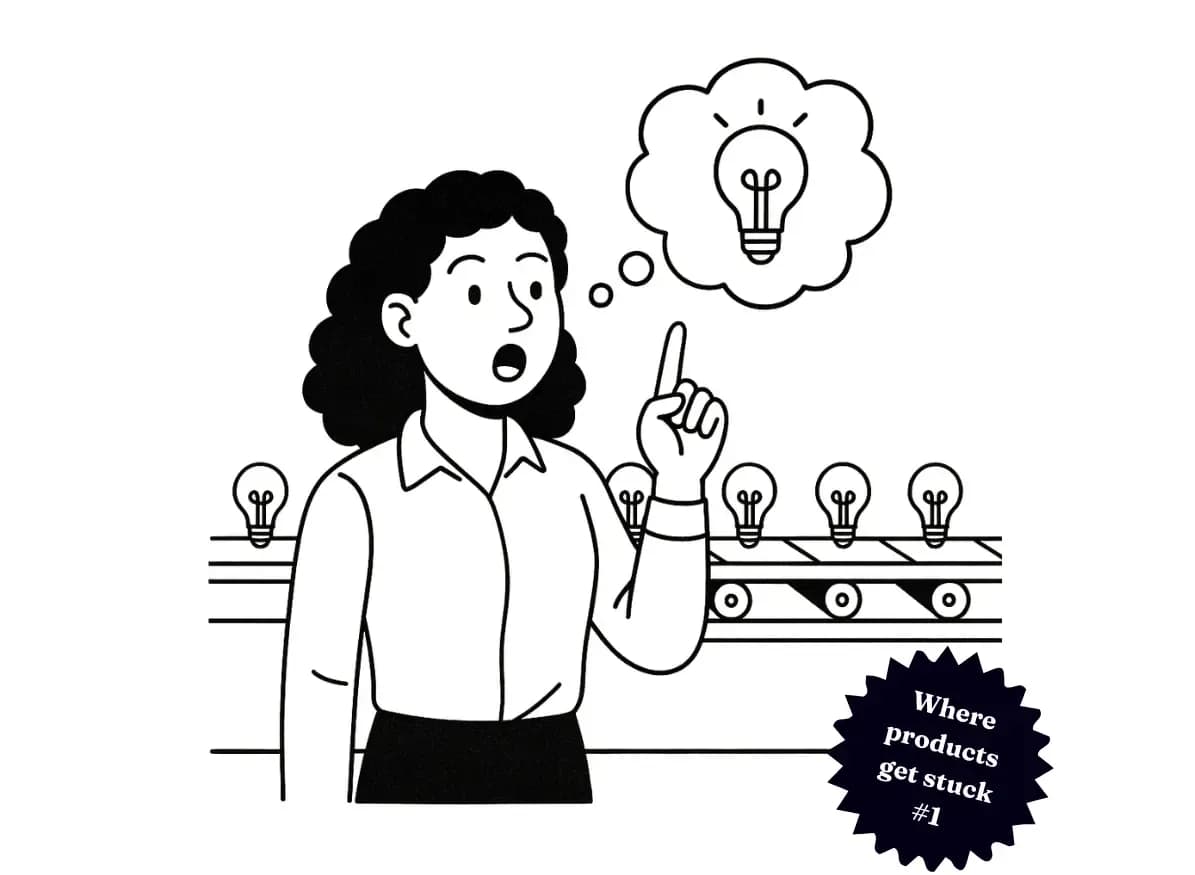
Having a working solution is not the same as having a market-ready product. Many B2B software companies discover this the hard way, after months of slow sales conversations, inconsistent messaging, and prospects who just don't seem to get it. Here's what's really going on, and what it takes to fix it.
This is the first post in "Where Products Get Stuck", a series of five on the challenges B2B software companies face when bringing complex products to market.
A lot of B2B software companies reach a turning point that looks like success but feels like confusion.
The technology works. Customers are using it. A pilot or two has gone well. But growth isn't happening the way it should. The sales conversations are long and complicated. The messaging feels inconsistent. Everyone on the team describes the product slightly differently. And leadership knows, somewhere, that the product is better than the market currently understands.
This is the project-to-product gap, and it's more common than most companies want to admit.
Built to solve a problem. Not yet built for a market.
Most B2B software starts as a solution to a specific problem, often for a specific client. That's a strength: it means the technology is grounded in real need. But it also means the product was shaped by the problem, not by the market.
When Belgian startup selink came to Sweetspot, they were in exactly this position. They had developed a genuinely innovative solution, a platform that unlocks the value hidden in system engineering data for complex industrial companies. Their pilot results were strong. The technology was solid. But translating that into scalable market success required a different kind of thinking. Working with Sweetspot, selink came away with a repositioned brand, a clearly defined target segment, and a funded growth plan, built on the same technology they'd always had.
The challenge wasn't the product. It was everything around the product.

selink had a strong pilot, but translating that into a scalable market success required different thinking.
The questions that don't have obvious answers
When you're deep inside a product, certain questions are surprisingly hard to answer:
- Who exactly is this for? Not in the broad sense (e.g. industrial companies), but more specifically. Which buyer feels the pain most acutely? Who has the budget? Who makes the decision?
- What category does this product belong to? If a prospect can't place your product in a familiar frame of reference, they won't buy it. Not because they are not interested, but because they can't evaluate it. You need to give them the box before they can open it.can't evaluate it.
- What’s the business model? Selling a service and selling a product license are fundamentally different motions. They have different buyer expectations, different contract structures, different success metrics. Many companies built around delivery are sitting on intellectual property that could be productized, but haven't made that shift explicitly.
These aren't questions you can answer once and move on. They shape everything: the roadmap, the pricing, the positioning, the sales narrative, the marketing collateral. Getting them wrong, or leaving them vague, creates friction at every stage of the commercial process.
Strategy before storytelling
The instinct, when a product isn't getting traction, is often to fix the marketing. Better website copy. A new slide deck. More content. But marketing can only amplify a message that already exists. If the strategic foundation isn't there, better execution just spreads the confusion more efficiently.
With selink, Sweetspot started with a deep-dive discovery phase to understand the business from the inside out: the market landscape, the competitive dynamics, the specific segments where selink's solution would resonate most, the architecture of the solution itself, and how it mapped to real customer pain.
From that foundation, the strategy could take shape: a refined market focus, a clear value proposition, a product roadmap aligned to the chosen segment, and messaging designed for decision-makers rather than technical evaluators.
That's a different order of operations than most companies follow. Most companies build the product, then write the website, then wonder why sales is hard. The sequence matters.
From roadmap to market reality
A clear strategy only creates value if it gets executed. That's where the project-to-product journey becomes operational.
For selink, execution meant several things happening in parallel: a brand refresh that reflected the repositioned company, marketing assets designed for the right buyer personas, operational processes tightened to reduce time-to-market, and funding support, including a successful VLAIO growth subsidy, to fuel the next phase.
None of these pieces work in isolation. A strong brand with weak messaging falls flat. Sharp positioning without the right collateral doesn't convert. An ambitious roadmap without the operational capacity to execute it stays on the whiteboard.
The companies that navigate this transition well treat it as a system problem, not a marketing problem or a product problem. Every part of the go-to-market needs to move together.
What this looks like in practice
At Sweetspot, this is how we approach that journey:
- In the Clarity phase, we get under the hood of the business: the market landscape, the buyer dynamics, the competitive positioning, and the real pain points the product addresses. This is the work most companies skip or shortcut.
- In the Shape phase, we turn that insight into strategy: a defined market focus, a value proposition built for decision-makers, and a product roadmap aligned to a specific commercial goal, not just a technical one.
- In the Grow phase, the strategy becomes operational: brand, messaging, assets, processes, and in some cases funding support to fuel the next stage.
It's not a linear march. The phases overlap and loop back. But having a structured starting point is what separates companies that scale from companies that stall.
Good technology deserves a market that understands its value. The companies that scale are the ones that figure out what surrounds the product, not just what's inside it.
Let's find your sweet spot
Working on a complex B2B product and not sure where to start?
Book a 30-minute conversation and get an honest look at where you are and where you want to go.