
You built it. Why isn't anyone buying?
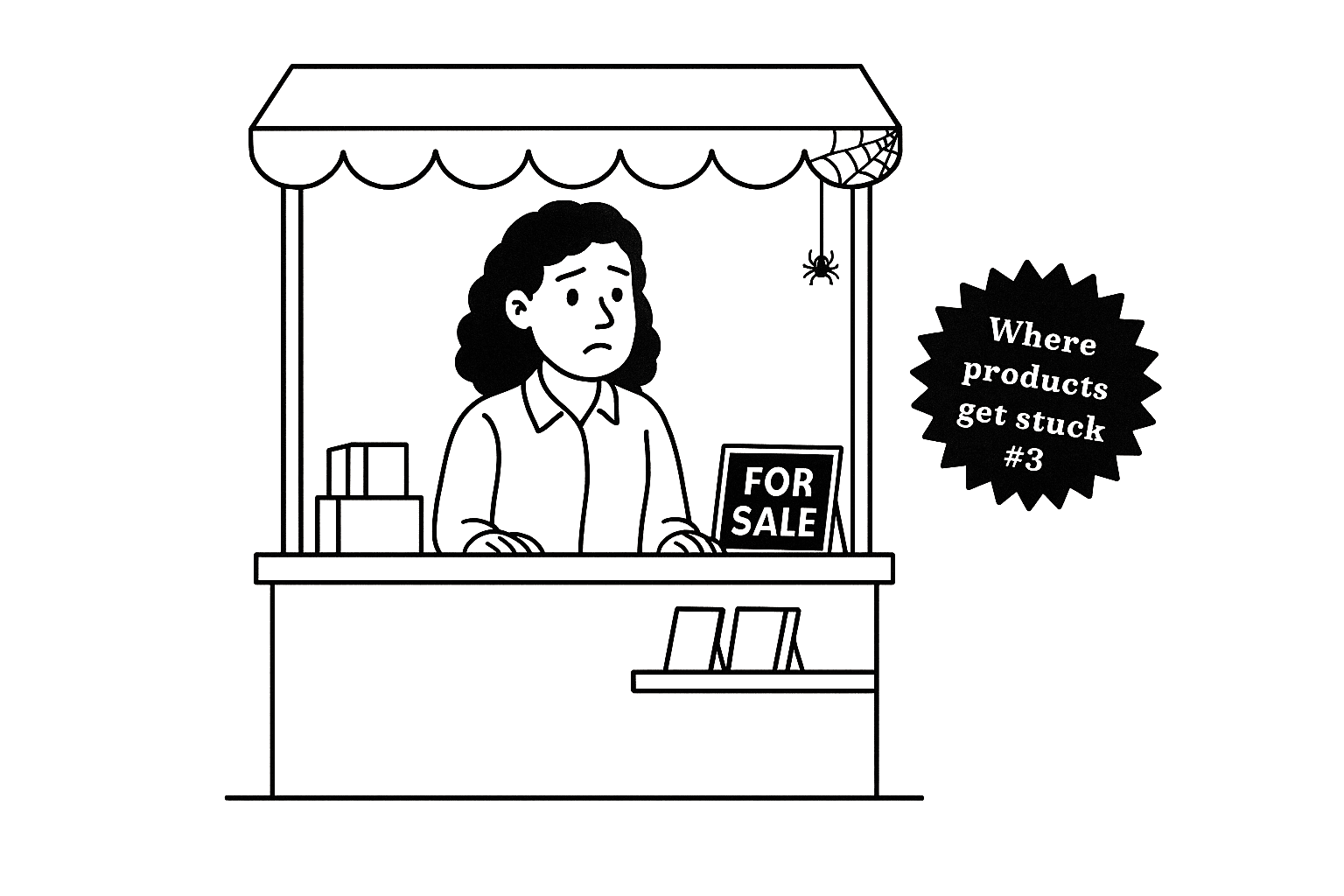
This is the third post in "Where Products Get Stuck", a series of five on the challenges B2B software companies face when bringing complex products to market.
You built a product. The MVP is live. The first pilots are done. And then… silence. Demos get scheduled but rarely turn into deals. Sales reports "interest" without real commitment. The pipeline moves slowly, or not at all. Internally, the conversation starts to shift. “We need more marketing. The market hasn't discovered us yet. Maybe the salespeople need better training.”
But when a product isn't getting traction, it's rarely about visibility.
What "no traction" actually looks like
Lack of traction has many names. Typically, it's a collection of symptoms that point to the same underlying cause:
- Lots of demos, few deals
- Long sales cycles that quietly stall
- Pilots that never convert into paying contracts
- Prospects who find the product interesting but have no budget or urgency
- Years of development and active marketing without external paying customers
- Free users who never convert to paid subscriptions
- Feedback that contradicts itself: every prospect wants something different
The pattern is familiar. The technology works. The team is capable. But the market isn't responding the way it should. If your last ten conversations didn't lead to a deal, do you know exactly why?
Five reasons products don't get traction
Traction problems are almost always alignment problems. The product, the buyer, the moment, the sales motion, and the business model behind it all need to point in the same direction. When one of those is off, the funnel slows down. When two or more are misaligned, it stalls completely. Most traction problems come down to one of five causes, and often, more than one at the same time.
- Wrong segment. The product was built for "anyone with problem X." But within that broad group, there's a specific subset for whom the problem is urgent and painful, and a much larger group for whom it's nice to have. Traction always starts with the first group. Aim too broadly and you reach no one.
- Wrong buyer. The product was designed for the user, but the buying decision sits with someone else. The user is enthusiastic. The decision-maker doesn’t feel the problem. Without a story for the actual buyer, there's no signature.
- Wrong moment. The problem the product solves is real, but it's not at the top of the customer's priority list. The pain exists, but it isn't acute enough to break through budget cycles and internal politics. This is one of the hardest forms of no-traction to spot, because it doesn't look like rejection.
- Wrong story. The value is explained in product logic ("here's what it does") rather than buyer logic ("here's what this means for your business"). Customers understand what the product is, but not why they need it now.
- Wrong business model. The product creates value, but the company has no commercial model, pricing logic, or internal incentive system that supports that value. In some cases, the product even threatens the current revenue model. When that happens, traction stalls because the organization is not truly set up to sell what it has built.
In practice, these cases rarely show up alone. They reinforce each other.
Why "more marketing" rarely fixes it
The instinct, when traction stalls, is to push harder. More content. More outbound. A bigger ad budget. A more aggressive sales cadence.
It rarely works, for a simple reason: marketing amplifies what's already there. If the message doesn't resonate, more marketing just amplifies the confusion. Sales activity can't compensate for a poor fit. Cold outreach into the wrong segment widens the top of the funnel without producing more deals.
The right question isn't how do we reach more people, but why aren't the people who already know us buying?
Three examples of ‘lack of traction’
The product looking for its segment. A startup we worked with had a proven technology and a successful pilot in their industry. But beyond that first customer, the pattern was inconsistent. Some prospects got excited. Others didn't. The target they had defined for themselves was simply too broad. The work began with sharper questions: which industries had the most acute version of the problem? Which buyers had budget and authority? Once defined, the right leads started converting.
The tool that should have been a service. Another company we worked with had spent six years building a B2B analytics product addressing a clear gap in standard finance tools. Three more years of active marketing, but little market traction to show for. The product wasn't broken. The market wanted to buy a result, not a tool. The setup alone needed weeks of guidance, not days. Instead of more sales effort, we chose to reframe the offering around the outcome.
The platform misaligned with its own business model. A third company had built a platform to help industrial customers extend the lifetime of their assets. After years of investment: 1% adoption, zero paid subscriptions. The technology worked. The deeper issue: their core business ran on volume: more interventions meant more revenue. The platform's promise (fewer interventions, longer asset life) directly contradicted that. The sales force had no reason to promote it. The traction problem was structural, not commercial.
Different companies, different industries, but the pattern is recognizable. Traction isn't proof that your product works. It's proof that your product, your buyer, the moment, and the business model behind it all align.
Where to start when you're stuck
If your product isn't getting traction, here are four places to look before reaching for more marketing budget.
- Talk to your last ten lost deals. Not to sell again, but to understand why they didn't buy. Not what they said ("no budget"), but what was underneath it.
- Compare your best deal to your average deal. What was different about the one that closed quickly and stayed? That's often the real segment, the one where traction lives.
- Test your value proposition against one specific segment. A sharp story for one segment beats a vague story for ten.
- Be willing to narrow down. The biggest traction blocker is usually the fear of excluding markets. But focus is what creates traction in the first place. Or in other words: if you’re afraid of excluding anyone, you risk excluding everyone.
‘No traction’ is not the end of it
A product without traction isn't a failed product. It's a product whose segment, buyer, moment, or story hasn't fully clicked yet. The work is to identify which one and adjust.
That's harder than running another campaign. But it's the only thing that actually moves the needle.
Stuck between launch and growth? Book a 30-minute conversation. No pitch, just an honest look at why traction isn't happening yet, and what could move it.